Author: Joel Reed


Effective launch: Time to plan


Effective launch planning begins with establishing some basic parameters about the product or service being launched, its potential impact in the market and the amount of budget allocated to the launch itself.

A leading practice is to consider three categories of launches as in the following table:

Launch Category


Definition


Marketing Budget


Product or Service Update Fix or add specific features on existing product or service with minimal incremental market value Less than 0.1% of annual revenue
Promotional New capabilities that are of customer interest and will drive increased
revenue of less than 3% over a 12 month period
Between 0.25% and 0.75% of annual revenue
Market Impact Significant new capabilities or a new product or service that will have
broad market appeal and will impact revenue by more than 3% in a 12 month period
Over 1% of revenue- likely in the 1% to 2% of annual revenue range

A Product or Service Update launch is one that typically only impacts existing customers and is communicated on a need to know basis. As such there is no or minimal  incremental revenue expected, and there is also no budget allocated for advertising expenses. A common example we all experience is an application upgrade on our smart phones.

A Promotional launch will drive some incremental revenue and require coordination with external resources. Often existing customers will be engaged as champions of the new product, service or feature and advertising expenses in the range of 0.25% to 0.75% of company revenue are typical. An example here would be a new feature that creates some competitive differentiation or enables an extra fee or charge on an existing solution.

A Market Impact launch will drive sufficient incremental revenue as to have material impact on revenue and expense budgets and is impactful to the entire target market or most of it. There are initial customers identified and supported as to be references for sales and advertising and it is typical to spend over 1% of company revenue on the market launch. A new product or service launch is a typical example here.

Launches are a process NOT an event.

There is as significant an effort ahead of the product or service release as there is after. In planning a launch there are typically 4 phases to consider – Initiate, Plan , Execute, and Monitor – as detailed below.

Initiate –This stage is where internal knowledge transfer occurs about the solution or product improvement to the cross functional launch team; an initial launch project plan is created; the kickoff meeting is held; and any key messages are defined. The team typically consists of product marketing and management, corporate and theater marketing, services/support and sales operations

Plan – During the planning stage the project plan is finalized, budgets are confirmed and allocated and metrics/KPIs are identified. The same cross functional team is engaged as in the prior stage and a calendar of events and activities is completed and published to appropriate internal organizations.

Execute – During the Execution phase regular program management meetings are held to track progress against plans with particular focus on project and budget management. Typically executive updates are prepared and distributed and it is during this phase that many of the marketing deliverables occur and the bulk of communications are completed.

Monitor – This phase may last 3 months to over a year and will track success against key performance metrics defined in the Plan phase. Most of these metrics are revenue performance focused in nature. The team will hold regular update meetings (typically monthly) to review and adapt activities based on real-time results and to take lessons learned from this launch and incorporate them into the launch template and other launches that are in earlier phases.

Throughout the launch process for all three launch categories, it is important to identify who needs to be engaged and informed as we will see in a moment. It is also critical to establish clear goals for each category so that the company can understand and measure success versus expectations.

Check in next week and we’ll move on to the communicating stage of an effective launch.


Effective launch series opener


If your company is like most companies it spends tens of thousands or hundreds of thousands of hours each year defining, creating and distributing the next new product or the next new product enhancement.

In my personal experience, hardware and software companies typically invest 8% to 15% of their revenue in development of new products and features.

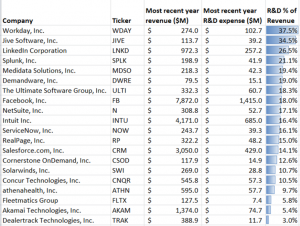
An analysis done by Quora.com shows that the spread is even larger for SAAS (cloud-based software providers) companies ranging from a low revenue 3% of to a high revenue of 37.5%.

Regardless of the amount spent, the same questions still apply.

  • Are companies getting a return on that investment? Do they even know?
  • Do companies actually create an environment in which an enhancement or new product actually has a chance to succeed in the market?
  • Do most companies even define metrics for success?
  • Do companies measure and track sufficiently the very metrics they set?

Much of the success or failure of a product or service will come down to how it is launched into the market as a whole; that is within the company itself and within the existing customer base and the target market in total.

Yet few companies take the time and spend the appropriate resources to define, execute and manage effective product launches that address all three of the aforementioned audiences.

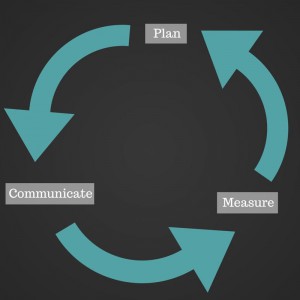
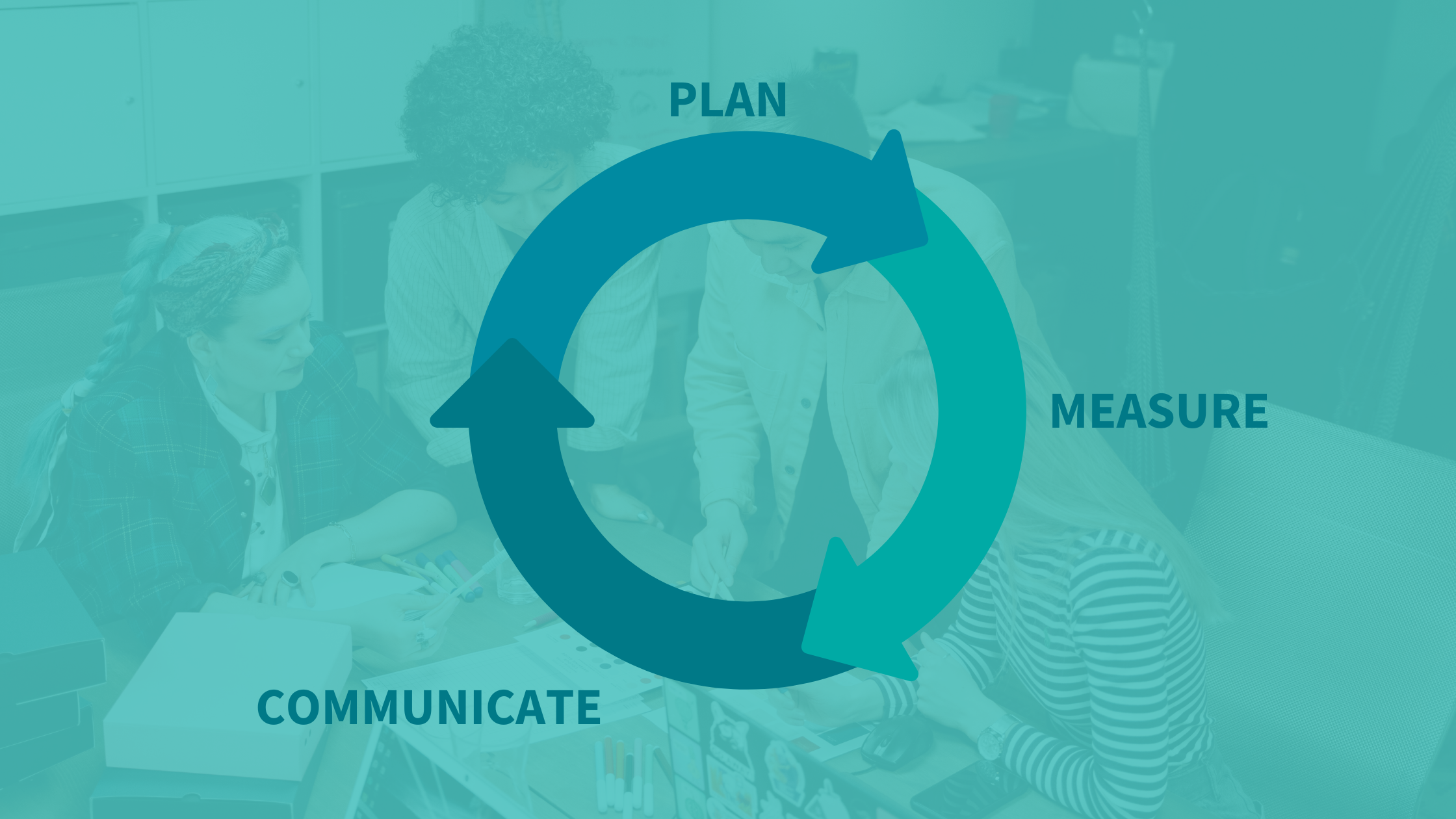
Plan

Define and utilize a consistent launch framework that engages the appropriate organizations, budget for your company (one size does NOT fit all here) and ensure effective oversight of that program. 

Communicate

Ensure the framework addresses appropriate and timely communication of the right information to each constituent group within and external to your company throughout the launch timeframe which typically encompasses activities well before actual product or service release to the market. 

Measure

Set realistic and measurable key performance indicators and track them for the appropriate length of time usually long after the product or service is released. Then take appropriate action to improve the Plan for future launches based on activities and results of past

Next week we will further discuss the planning stage to continue on the series of Effective Launch.


Time to get personal: How B2C engagement is changing B2B


A seismic shift is happening in the way we do business, and Ram Charan, author of a recent Fortune article has called it “the most sweeping business change since the Industrial Revolution.”

“…algorithms are dramatically changing both the structure of the global economy and the nature of business. Though still in its infancy, the use of algorithms has already become an engine of creative destruction in the business world, fracturing time-tested business models and implementing dazzling new ones. The effects are most visible so far in retailing, creating new and highly interactive relationships between businesses and their customers, and making it possible for giant corporations to deal with customers as individuals.”

In B2C transactions, consumers have gone from a category or customer type, to an individual who is not only noticed and heard, but expecting to be catered to. The real-time interactions that take place via social media, and personalized customer profiles created through algorithms and behind-the-scenes data collecting, have changed the way in which consumers expect to be engaged. Customer interaction has come full circle to the days before the Industrial Revolution.

“Indeed, the math house is shaping up as a new stage in the evolution of relations between businesses and consumers. The first stage, before the Industrial Revolution, was one-to-one transactions between artisans and their customers. Then came the era of mass production and mass markets, followed by the segmenting of markets and semi-customization of the buying experience. With companies such as Amazon able to collect and control information on the entire experience of a customer, the math house now can focus on each customer as an individual. In a manner of speaking, we are evolving back to the artisan model, where a market “segment” comprises one individual.”

What does this mean for B2B? Understand, embrace and get personal.

Personalized B2C experiences have created expectations for prospects in B2B environments, and require sales representatives adapt their selling approach.

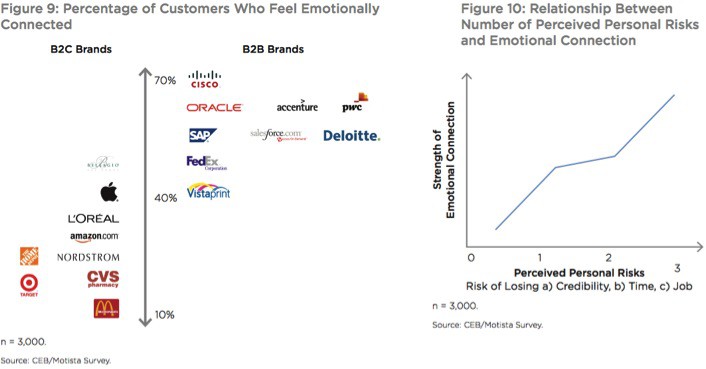
Many people would assume B2C transactions are more personal and made with more emotion than B2B transactions. A recent report by Google and the Corporate Executive Board indicates the opposite may in fact be true:

Below, Figure 9 shows B2B customers are actually more emotionally connected to brands than B2C customers.

Digging deeper, the high level of emotionality in B2B is not so surprising. B2B purchases entail personal risks—far more than most B2C purchases. B2B purchase stakeholders fear:

  • Losing time and effort if a purchase decision goes poorly,
  • Losing credibility if they make a recommendation for an unsuccessful purchase, and
  • Losing their job if they are responsible for a failed purchase.

Moreover, the more personal risks a purchase entails, the more emotional buyers feel—and the more they attach to brands that can provide value and eliminate risk (Fig. 10).

B2B purchasing decisions are personal, and sales representatives need to treat them that way by connecting with customers on a deeper level. Messaging and marketing need to speak directly to the person, instead of to the company. Sales teams need to know their customers as more than numbers and entities, and create content that is compelling, relevant and valuable.

Successful B2B sellers ignite the business, financial and personal pains of their buyers – and it’s that personal pain threshold that matters most. Because the process is emotional, building value-based relationships needs to be prioritized over selling. Value-based relationships are predicated on providing valuable insight, expertise and solutions that focus on the customer’s specific and unique needs. Through these relationships, trust is built and sales teams are able to better understand how to serve their customers. Sales representatives should work to create a memorable and valuable experience their customers are not receiving from any other company.

Personalizing strategies often requires investing in necessary go-to-market approaches that allow companies to create customer profiles (aka buyer personas), where they are able to track each customer’s journey individually. For B2B sellers, this personal engagement isn’t going to be a luxury much longer; soon it will be expected. This shift requires sales executives take a step back to a time to when serving the customer was their first priority.