Author: Joel Reed


Ultimate Pricing Power Part III: THE GROUNDWORK OF EFFECTIVE PRICING STRATEGY


I recently shared the key elements that make for an effective pricing strategy and who should be leading this. Yet actually taking the steps toward creating an effective pricing strategy can be daunting.

Emotions can rear their heads and lead decisions astray. Opinions can undermine what should be a calculated, informed decision. And, most importantly, your leadership team should be able to use this strategy to replicate the process for any product updates or new solutions into the future.

I am here to show you the approach that will lead you and your team to a pricing strategy that serves your buyers, reduces future churn and supports your revenue performance. Are you ready to set the groundwork?

THE 5 GOALS OF PRICING

In order to realize success in the end, your leadership team must first identify which goal your exercise will help fulfill. Five common pricing goals include:

  1. Alignment with Financial Plans and Strategy: Defined in specific revenue targets, revenue mix, growth rates and margin targets over time.
  2. Growth: Defined in terms of revenue, market share, market penetration, units sold, and customers retained or acquired.
  3. Retention: Defined typically by revenue or customer numbers, but may also include rates by geography, industry or other market / product segment.
  4. Pull-Through or Cross-sell / Up-sell: Defined by attachment rates and cross-sell or up-sell rates.
  5. Product Selection: Targets associated with selecting one solution versus another (typically considered in replacement, end-of-life or transition strategy scenarios).

6 KEY PRICING INPUTS TO GATHER

Before any decisions start to form, your team needs the right input and data to inform them. These six pricing inputs all play a key role in the final pricing strategy. And when they are all considered and incorporated, your organization will ultimately reduce significant pricing churn into the future.

  1. Product Cost: For example fixed cost and variable cost, such as data storage, maintenance and access
  2. Competitive Environment: Such as pricing level and pricing approach
  3. Financial Strategy and Financial Plan: Like revenue mix by product segment / category (this impacts packaging and bundling considerations)
  4. Differentiated Value Proposition: Such as assessed level of differentiation in the marketplace
  5. Product Strategy and Defined Roadmap: For example growth dimension (what are the goals and tactics?) and identifying products that will pull this product into a sale or vice-a-versa
  6. Market and Environment Trends: Like regulatory and compliance drivers, as well as overall economic market trends

UNLOCK YOUR ULTIMATE PRICING POWER

A B2B Leader’s Guide to Pricing Strategy Workbook provides B2B leadership with the comprehensive four key pricing principles and detailed six steps that will lead you to a successful pricing strategy and outcomes. Download the guide for the complete framework.


DOWNLOAD NOW


Ultimate Pricing Power Part II: UNLOCK YOUR POWER WITH 4 KEY PRICING PRINCIPLES


Nextworld was going to market with a powerful no-code enterprise resource planning (ERP) platform. Rather than assign an ambiguous, arbitrary cost to their subscription services, they recognized that pricing was key for both their organization’s and their buyers’ long-term success.

“Pricing can be a highly debatable, emotional subject, both internally and externally,” Minda Marshall, VP of Business Development, said.

For organizations like Nextworld, a calculated pricing strategy can provide a substantive competitive advantage or it can be an albatross that impedes sustainable growth. Here, we share four key pricing principles that can help you achieve the latter.

4 KEY PRICING STRATEGY PRINCIPLES

There should be zero mystery, ambiguity and unpredictability in pricing. Selling organizations must stand on objective, solid, repeatable ground each time they set about pricing a new solution or bundle.

Our solution management experts at Mereo independently researched 20 B2B software companies, including application and platform providers. We supplemented our online research with 15 in-depth buyer and seller interviews focused on C-level executives that procure and sell software, as well as product management and sales executives of software providers — representing the spectrum from SMB to enterprise companies.

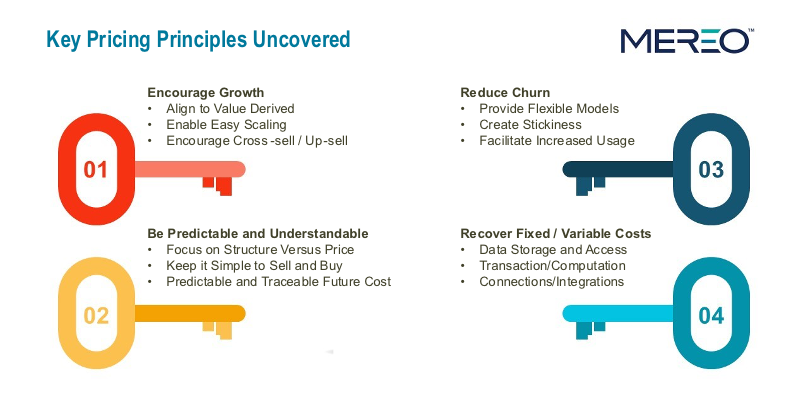
After digging into the biggest challenges, solutions and outcomes for our participants, we yielded four key pricing strategy principles every seller should consider when determining the right price for a solution:

1) Pricing Should Encourage Growth

As obvious as this seems, in the companies we were helping and that we researched, we found numerous examples of pricing models that in fact discouraged user growth and adoption.

In those cases, it was necessary to revamp pricing strategies to:

  • Align the pricing to the value the solution delivers
  • Simplify scaling as the business requires
  • Package to encourage initial adoption as well as cross-sells and up-sells of new features and associated modules

2) Pricing Should Be Predictable and Understandable

Buyers want to predict how much a solution costs now and into the future. The sellers in Mereo’s research also did not want models that created buyer confusion and objections to closing a deal — in essence not adding friction to the buying journey.

As part of aligning to this principle, selling organizations need to think in terms of pricing structure versus the price itself. Keep the structure simple to understand for the buyer and seller, and consider how predictable it will be for you as a solution provider and them as a buyer. Can the buyer see how future costs would be impacted, for instance, by a merger, acquisition or other growth strategy?

3) Pricing Should Reduce Churn

Sellers must make it easy for buyers to remain a customer. Providing flexible models for consuming the software from both a technology and pricing approach (e.g. modules, users, transactions) is critical, but, as a provider, you will also want to think about what will make your solution “sticky” in the long-term. For example, a seller could provide built-in concierge service for specific tools to ensure they are rapidly deployed. The strategy varies between solution, market and customer, but is important to consider from the onset.

4) Pricing Should Recover Fixed and Variable Costs

Solution providers, especially those in rapid-growth mode, often talked about the “surprise” factors associated with using third-party hosting services (e.g. Microsoft or Amazon Web Services). These providers had not considered all the associated costs related to storage, transactions, integrations and more. As such, they often were put in a position of having to go back to customers upon renewal with significant cost changes.

No buyer wants to be surprised by data and storage charges, unexpected transaction fees or costs of integrations to other mission-critical systems (see Principle 2). Do your up-front research and do it well to make this part of pricing transparent to the buyer. Also, consider approaches that allow you to recoup these environment charges early to reduce cost absorption risk on your business.

PRICING PRINCIPLES IN PRACTICE

These four key pricing principles helped Nextworld enter the marketplace competitively and with little barriers to sales — setting Nextworld up for sustainable revenue performance from the start.

“Mereo came in as an objective expert,” Marshall said. “They didn’t just provide pricing input focused on the software aspect, they delivered a holistic view of pricing, packaging and everything that rolls into a complete ERP SaaS solution.”

Learn more about Nextworld’s successes here.

UNLOCK YOUR ULTIMATE PRICING POWER

A B2B Leader’s Guide to Pricing Strategy Workbook provides B2B leadership with the four key pricing principles AND six steps that will lead you to a successful pricing strategy and outcomes.


DOWNLOAD NOW


Ultimate Pricing Power Part I: Who Is in Charge of Product Pricing?


Pricing a B2B solution is complex. People are quick to debate pricing models and numbers. Sellers and buyers alike can fall prey to emotions over reason when considering dollar signs associated with a solution. And it is a challenging concept: What is the buyer willing to invest for the target outcome this solution delivers? What should the value this solution provides cost a buyer? What is it all worth?

The leading B2B organizations do not leave pricing up to chance. They treat pricing as an art and science.

In part one of this four-part series, let’s look at the leaders who should be driving pricing power forward in the organization and what key roles they play.

WHO IS IN CHARGE OF PRICING?

These key leaders within a B2B organization should play an active role in the information-gathering, discussions and roll-out of pricing and its policies. Importantly, for pricing to work well, these leaders must be working in unison with clear role expectations and regular communications.

FINANCE’S ROLE: Finance creates the internal strategic context for pricing models and decisions by setting financial milestones and direction to achieve the overall business plan. Recent movement towards subscription revenue models are an example of this context setting.

  • Strategies
  • Annual Plans
  • Policy Compliance

PRODUCT MARKETING’S ROLE: Product Marketing interaction with external players (e.g. customers, analysts, competitive sensing) provides key insights into broad market and specific competitor trends. Alignment of the differentiated value proposition to the pricing approach is critical.

  • Market Sensing
  • Analyst Input
  • Messaging and Differentiation

OPERATIONS AND SUPPORT’S ROLE: The Operations team provides key cost and risk information needed to model pricing impacts on margin and investment decisions. As an example, for software companies hosting solutions in a cloud environment, fully understanding cost drivers is critical to the pricing model.

  • Cost Information
  • Efficiency Plans
  • Strategies
  • Roadmaps

SALES’ ROLE: Sales complements Product Marketing’s input with more real-time competitive insight and feedback on pricing policy impact on sales performance.  Sales representatives’ reaction to pricing models, pricing complexity and approval processes and impact on compensation plans can be a key performance driver.

  • Market Insights / Sensing
  • Competitive Information
  • Policy Compliance

PRODUCT MANAGEMENT’S ROLE: Product Management needs to consider pricing in the context of the Whole Product design, strategic plans and investment roadmap including one solution’s impact on the broader portfolio.

  • Physical Product Design
  • Future Direction
  • Co-Dependency Relationships
  • Strategy
  • Roadmap
  • Final Pricing Decision
  • Roll-out

HOW IS PRICING FINALIZED AND APPROVED?

With so many leadership functions vital to uncovering the right pricing model and approach, it may seem daunting to land on an ultimate decision. Leading pricing committees benefit from developing a formalized process that reduces heated disputes and in-decision.

Key points in the process include:

  • Formalization of the pricing process
  • Agreement of roles and responsibilities (as outlined above)
  • Regular pricing committee meetings (often monthly or quarterly)
  • Standard approval process
  • Instantiation of a feedback mechanism / loop so the committee can respond quickly to unexpected market or competitive changes

UNLOCK YOUR ULTIMATE PRICING POWER

Download A B2B Leader’s Guide to Pricing Strategy Workbook to discover the four key principles and six steps to a successful pricing strategy.


Planning a Hybrid Sales Kickoff? Proceed With Caution


In a recent Mereo poll, we found that 15% of companies in our sampling plan to hold a hybrid sales kickoff, while another 15% were undecided on their plans yet.

Hybrid sales kickoffs hold the appeal of one-size-fits-all. What could go wrong with giving your selling force the option to engage? Yet, much like the slippers that either dwarf your feet or barely cover your big toe, a hybrid sales kickoff can actually do more harm than good for both planning leadership and participants alike.

If, due to lingering restrictions, financial challenges or other considerations, a hybrid sales kickoff is your only option, we want to provide you with these cautions and potential solutions to make the best of it. Or, if you need more justification for your entirely in-person or all-virtual event, we have your defense lined up here.

HYBRID SALES KICKOFFS ADD EXTRA STRESS ON PLANNING COMMITTEES

One of the greatest undertakings in planning a sales kickoff is effectively creating and delivering content. As many organizations have learned through these last few years, virtual content formats and delivery must differ from in-person content in order to remain effective.

When planning a hybrid event, planning committees must make one piece of content available across these two different formats, all the while sorting out the logistics to deliver them seamlessly across multiple channels during the event too. While the planning committee’s purpose is to serve the participants, undue headaches and stress hinder the strategy and planning of the overall program, which impacts professionals serving on the committee as well as participants alike.

HYBRID SALES KICKOFFS LEAVE PARTICIPANTS LESS ENGAGED

For your participants, a hybrid sales kickoff may limit their engagement if the planner is not careful. Virtual and in-person formats demand different schedules in order to keep participants fresh and captivated. In virtual settings, sales kickoffs work best in shorter engagements with small breakouts driving increased participation across a longer event time period — for example, two hours per day over a week or two. For in-person settings, traditionally everyone comes together for highly-engaging sessions and events across a few days. There is an inherent disconnect by trying to merge both formats into one event, where one group suffers their ability to engage meaningfully.

Beyond engagement, too, a hybrid event can limit interactions. In a traditional in-person setting, participants are often given plenty of opportunities for formalized and impromptu networking, relationship-building and culture-deepening moments. Virtual formats also provide avenues to recreate these team-building moments to some degree. Yet, in a hybrid format, your in-person participants and your virtual participants often remain fractured and it takes special planning to try and integrate the two groups.

PLAN WITH PRECISION

There are numerous more considerations for your sales kickoff. And we at Mereo have developed the guidebook to help you lead yours to success. Download The Ultimate Sales Kickoff Planning Playbook, and gain leading B2B sales kickoff planning best practices.


YOUR FREE COPY AWAITS


WHAT IS PRODUCT-LED GROWTH (PLG) — AND HOW CAN IT IMPROVE YOUR REVENUE PERFORMANCE?


Product-led growth (PLG) has been a rising strategy of late in the B2B sphere — especially within the private equity investment space when it comes to Software as a Service (SaaS) portfolio companies. According to the 2022 Product-Led Growth Index report, 58% of surveyed companies already were practicing PLG and 47% planned to double their investment in the year ahead. But what does this growth strategy actually entail?

Multiple variations of PLG definitions exist. Some describe PLG as a business methodology in which the product itself primarily drives user acquisition, expansion, conversion and retention. Another form of PLG describes it as an end user–focused growth model that relies on the product as a primary driver of customer acquisition, conversion and expansion.

Regardless of source, all definitions share one key element in common: To be successful, a company must drive growth by creating a compelling user experience with a market-relevant solution. Therefore, they must also commit to relentlessly analyze and act on usage data to increase their go-to-market efficiency.

What does this mean for your go-to-market approach? In this article, I will dissect what PLG is — and, importantly, help overcome any misconceptions by detailing what it is not.

WHAT PLG IS

In many ways, PLG aligns with a number of key product management strategies and practices the leading B2B organizations follow.

PLG increases focus on the Whole Product approach. Every part of your solution that impacts the user experience becomes more important. This includes considerations such as pricing and packaging, services, complementary products and adjoining solution ecosystems, support and break / fix — to name but a few. Every facet of how a product is bought, consumed and used needs to be defined and honed.

PLG requires companies to engage the market in strategy and roadmap development using approaches such as:

  1. Advisory boards: To understand market challenges and needs
  2. User groups: To understand how end users consume the product in the context of their business processes and daily life
  3. Early development cycle testing: To engage users for insights on interfaces and interaction points, and to understand how intuitive the solution is for accelerated ramp of a user base
  4. Embedded and intuitive support tools: Chats, videos, help desks, videos, etc. that enable users to educate themselves and quickly get help 

PLG fundamentally relies on a foundation of a full understanding of your target buyer’s key problems issues to ensure 1) you are meeting those challenges and 2) you can create assets to properly market and demonstrate the capabilities and their value.

PLG puts a spotlight on effective governance, which becomes even more critical in this approach. Companies need to fully understand and obtain feedback through multiple channels — user inputs, ratings, usage patterns, etc. — and continuously adjust the product to those inputs (and to competitive responses) for success. 

WHAT PLG IS NOT

PLG is not about selling a product without context of the market, the buyer and their issues. Products “sell themselves” only when the buyer believes you have a full grasp of their needs and pains — and then believes your solution addresses those needs better than your competitors’.

PLG is not a replacement for defining and articulating your differentiated value proposition. Rather, with full understanding of the market, you can align your product capabilities to those needs and articulate how you uniquely bring specific capabilities to answer these needs. 

PLG is not effective without satisfied buyers and clients advocating for your solution. Take the time and expense to build an effective client reference base or rating system to capture and position success. Client stories and references are still the best sales tool.

PLG AS PART OF THE SOLUTION MANAGEMENT STRATEGY

PLG can support organizations’ success, as long as the rest of the solution management engine is working. If one part of the strategy is broken — from solution themes to validation to governance, pricing strategies and more — it may be holding you back from your full revenue potential.

We can help. At Mereo, we call PLG by another name, specifically the Whole Product approach. And our experts have written the executive guidebook for building a winning solution management engine around this. Get the expert guide to unstoppable revenue performance.


LEARN MORE


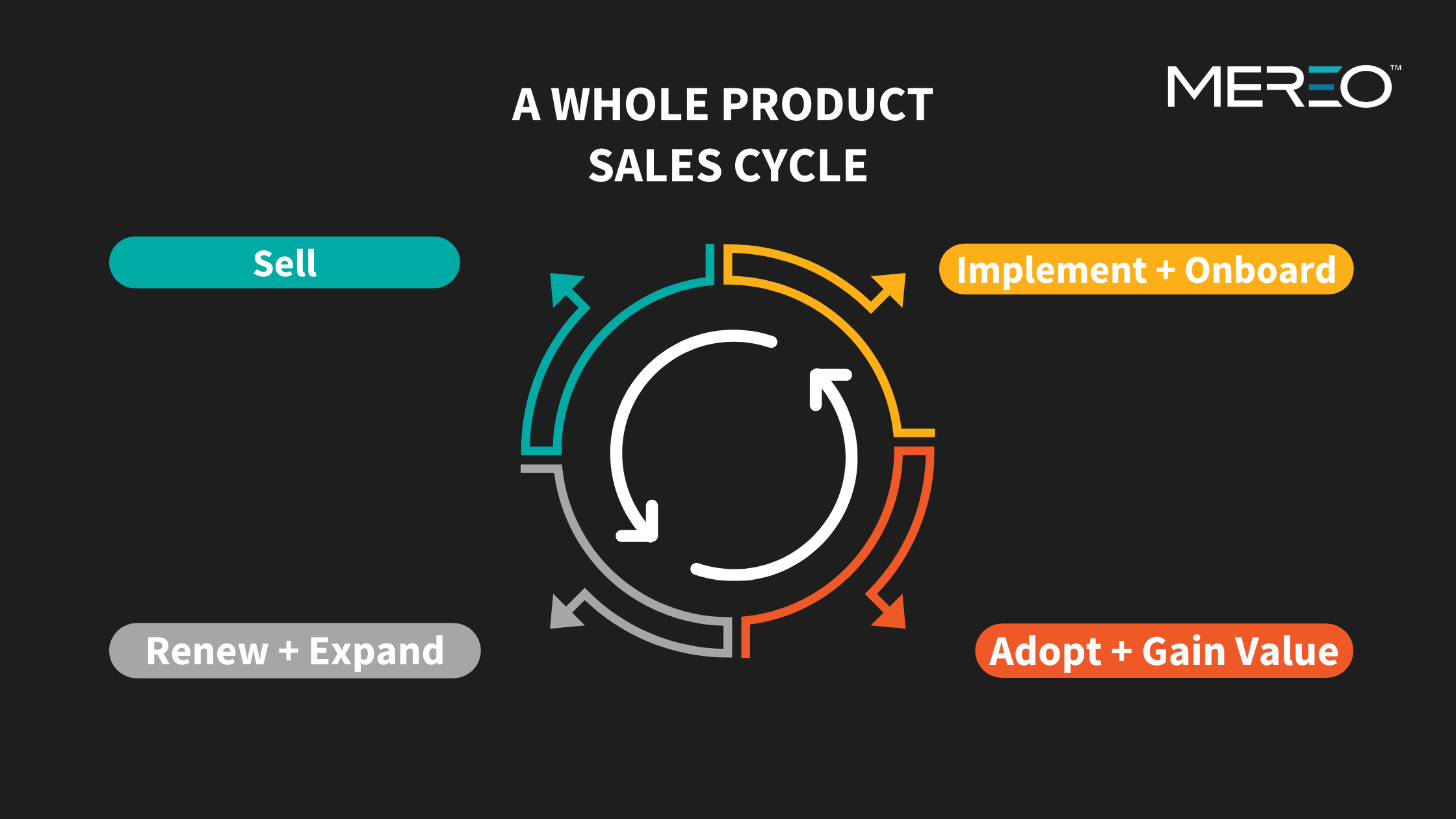
Does your organization struggle with follow-through? Reimagine your sales cycle steps to Seek to Serve™


What is the last step of your sales cycle? Most B2B sales organizations will consider the job complete at the contract signature. The goal has been reached, the quota met. All seems to be in order here.

Yet, if the true goal of sales is to Seek to Serve™ a buyer, the sales cycle is not over until the value promised is actually the value delivered. A purchase alone does not guarantee this. But the majority of B2B sellers are failing on this vital follow-through.

In Consumption Economics: The New Rules of Tech, only 14% of surveyed business executives rated their software installations as “very successful.” A number of buyer struggles from poor user adoption to long time-to-value have driven this overwhelming buyer dissatisfaction. The increasing adoption of SaaS software deployment models is accelerating the time-to-value issue even further that, in turn, exacerbates renewals — the revenue cycle is unforgiving. As it is, according to Forrester Research, B2B buyers believe only 8% of salespeople are focused on driving valuable end results.

It is imperative your organization expands its sales cycle to ensure customers receive the value they have purchased — by adopting your solution with ease and success. Supporting this can improve buyer health scores and increase the likelihood of buyer retention and renewals. And even as little as 5% increase in retention can boost profits by 25%, supporting sustainable revenue performance.

To start, your leadership team must productize your onboarding, adoption, education and account management services through, what we call at Mereo, the Whole Product approach.

EXPAND YOUR SALES CYCLE STEPS — EXPAND YOUR VALUE

The Mereo Whole Product approach treats your solution as more than a piece of code or hardware. Your solution becomes the combination of your core product, your tangible product and your augmented product — the services and support you build around the core.

In practice, the Whole Product approach and expanded sales cycle amounts to:

Introducing your onboarding, implementation, education and adoption, and support services during the sales cycle.

Leverage these services as an essential — and perhaps differentiating — complement of your product offering. Show how your approach will drive value and a return on their investment.

Ensuring an overlap in customer handoff between the sales team, onboarding team and account management.

Maintain sales engagements until onboarding is complete and account management takes the reins of buyer support. Embrace and envelope the buyer during the point where their risk is highest — implementation.

Including project management, technical services, communication (marketing to their users) and education as part of the onboarding solution.

Help them communicate and drive user adoption. Leading companies offer a 30- to 90-day window of concierge services to every customer to ensure adoption happens quickly and seamlessly. Many even include a formal training program at a cost as required with every contract to accelerate adoption.

Employing a formal account management approach for all customers.

Hold regular health checks with your client to help them understand adoption by area (e.g., function, region) — while helping illuminate opportunities to improve value creation. These health checks can also lay the groundwork for account expansion through user growth or complementary product sales. Using an ABC analysis based on actual and / or potential revenue, schedule these account reviews on a monthly, quarterly or semi-annual basis as the buyer’s value to your organization dictates. 

Engaging your best customers in customer advisory boards and user groups so they can learn from each other — and you can learn from them.

Create online forums while scaling thought leadership and best practice communications. Encourage and respond to your buyer’s feedback and input that can improve and shape your product strategy and roadmap.

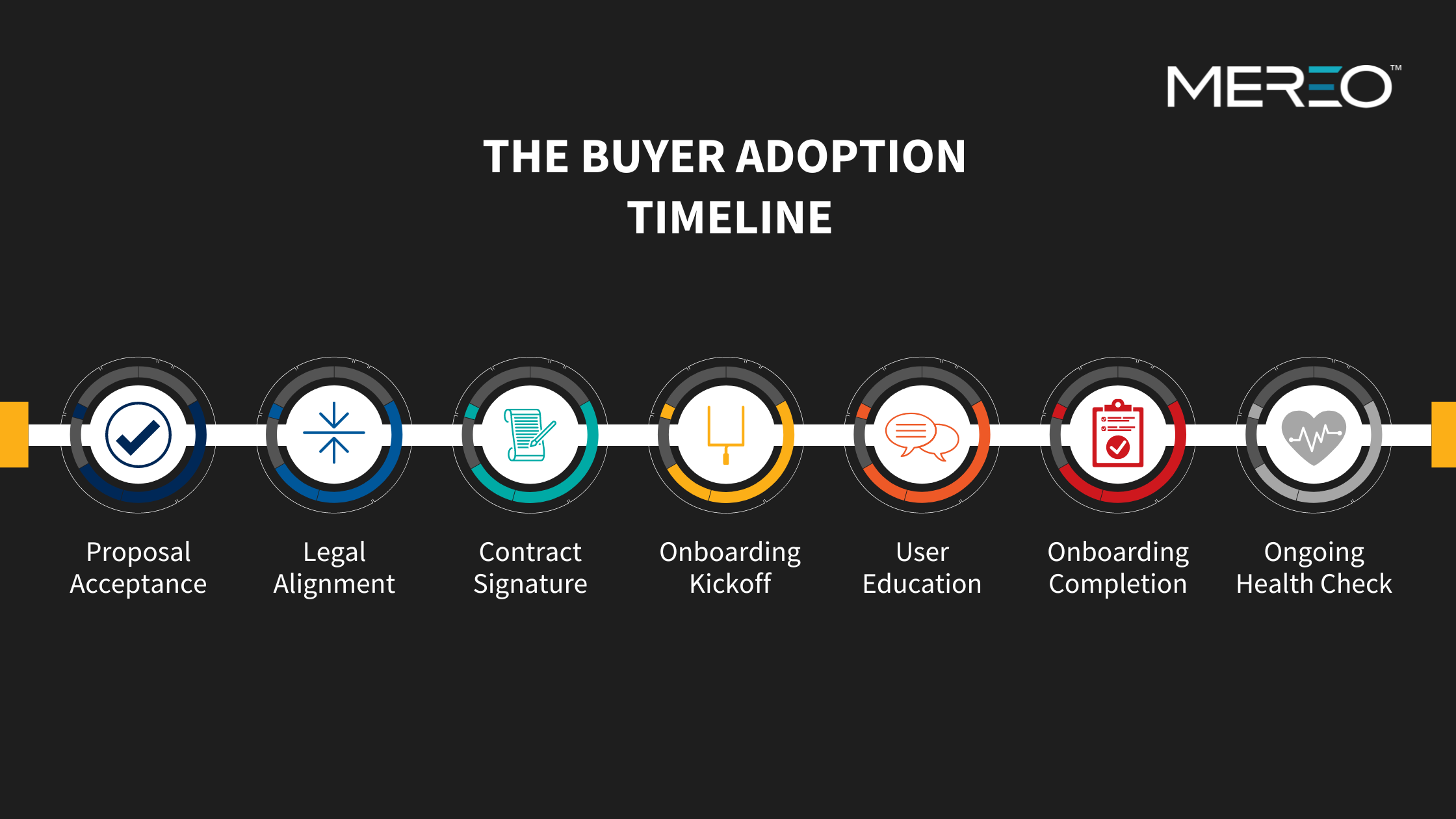
Lastly, reflect your Whole Product approach in the proposal timeline to show your prospect you mean to be their trusted advisor for the long haul — and to set your organization apart from competitors. The contract signature will become merely a step on a comprehensive path of value, and an easier decision for your buyer at that.

TAKE THE NEXT STEPS TOWARD SUSTAINABLE REVENUE PERFORMANCE

Cloud-based deployments and subscription revenue cycles make buyer renewals and expansions all the more critical to revenue performance. Your buyer’s satisfaction relies on the value your organization can create and, most importantly, actually deliver for successful user adoption.

Transform your sales cycle to elevate value for your buyers and your organization alike. Contact our Mereo expert revenue consultants to set up a 30-minute baseline review of your current approach.


GET THE SOLUTION MANAGEMENT GUIDE


Communicate Price Increases

THIS IS HOW YOUR CUSTOMERS WANT YOU TO COMMUNICATE PRICE INCREASES


“U.S. Inflation Rate Accelerates to a 40-Year High of 7.5%.” “Strong consumer demand and pandemic-related supply constraints continued to push up prices in January.” “Wholesale prices jump 9.7% in January, further evidence of red-hot inflation.”

Headlines like these have seemingly become commonplace over the last six months.  Whether you believe these inflationary trends are transitory or longer lasting, as a business selling goods and services to other businesses you are likely to be raising prices to recover rising wage and supply costs and to try to maintain your margins. Subsequently you will face difficult discussions with your customers (and prospects) — with your sales team at the front line of these interactions.

Sales professionals are (not surprisingly) focused on selling — prospecting for new opportunities to serve customers and to provide them with differentiated solutions, driving value for them and revenues for you. Sales teams often do not have a vast store of knowledge to communicate price increases. And unless they have been around 40 years, these communications are surely not as developed or practiced as a prospecting call.

With the extent of the price increases in this current environment, your salespeople cannot afford to wing it. Your sales leadership and sales enablement teams must provide the right training and tools now to make these necessary albeit unwanted communications more digestible — for your team and your customer. Here are five key areas to focus your teams’ efforts.

UNDERSTAND MARKET CIRCUMSTANCES AND DRIVERS, AND PRACTICE EMPATHY

To truly serve customers, salespeople need to serve as sources of insight and market knowledge. Thus to the greatest extent possible, arm your salespeople with information about:

  • The market drivers of the pricing changes
  • Efforts your firm has taken to mitigate these impacts
  • How your business is communicating this information in as timely a manner as possible to enable your customers to react and protect their margins

Most of all implore your sales force to be empathetic: listen to your customers, understand their issues and concerns, and be on the lookout for potential ways to offset these impacts with other solutions that may reduce costs elsewhere. A strategy of Seek to Serve, Not to Sell™ helps selling organizations maintain sustainable revenue performance throughout all market conditions.

TREAT EVERY INTERACTION AS A POTENTIAL OPPORTUNITY

During customer discussions, your salespeople should be on high alert to uncover alternative solutions that mitigate some or all of the price increase impact. For hard goods perhaps there exists an alternative part or redesign support. For software or services that may translate to bundled approaches or volume agreements that reach a discount threshold. There may also exist solutions you offer that your customer has not yet deployed that may help lower costs in another business area (i.e., cross-sell or up-sell). Ultimately, salespeople should not treat buyer communications about price increases as a scripted interaction but rather as a discovery session. Salespeople can feel like they are selling once more — while customers gain a trusted advisor.

POSITION AND ENABLE YOUR SALES TEAM TO HANDLE THE EXPECTED OBJECTIONS RAISED

Whether the price change is within your control or not, customers will likely raise some objections. Prepare your sales force to effectively handle these interactions with reframes:

  1. Appreciate the buyer surfacing the objection.
  2. Acknowledge the underlying concern (empathy).
  3. Understand the source of the objection.
  4. Position a strength, preferably a new offering or a differentiated approach you are taking.
  5. State the benefit of the interaction (timely communication, alternative approaches, etc.).
  6. Offer a relevant example of how this can help them / has helped others.

COMMIT TO EFFECTIVE AND TIMELY EXECUTION

Depending on the circumstance there may be a specific window of time (e.g., contract renewal, supplier price increases for you) that make the communication of these price changes time-sensitive. Typically, the faster you communicate the increases, the better you protect your margins — and the more time a customer has to respond and protect their margins. Make the actions and expected outcomes clear to your sales team. Help them understand why this is important to the company, to their success and to your customer.

PRACTICE FOR BETTER — MAYBE EVEN PERFECT — INTERACTIONS

If communicating price increases is not a developed skill among your team, take the time to practice the communications in mock scenarios. Record a sample effective interaction, arm them with cheat sheets on how to handle the call and the objections, and coach them to success. Then reinforce and remind often. Whatever your sales training and enablement strategy, do not let your salespeople use your customers or prospects as practice dummies.

GET THE PLAYBOOK TO ENABLE YOUR TEAMS TO COMMUNICATE PRICE INCREASES

Do not let price shock or sales communication fumbles derail your deals. Prepare your sales teams to handle price conversations and objections with ease and refinement — for our inflationary environment today and for any shifts into the future. We can help.

Learn how Mereo revenue consultants developed the playbook for objection handling strategies, price messaging and sales tools for Nextworld — a cloud-based ERP software provider — helping this new firm enter the marketplace competitively and confidently.


PREPARE YOUR SALES TEAM FOR SUCCESS


Pricing Strategies to Optimize Your Revenue Performance


Pricing strategies are a vital part of the solution, financial and go-to-market elements of your organization. Pricing affects profitability at every level of your business, including gross profit and EBITDA (Investopedia). In fact, according to Profitwell, as little as a 1% improvement in price optimization can result in an average boost of 11.1% in profits. The benefits are easy enough to understand and grasp.

Yet if only it were so simple to figure out your solution’s pricing sweet spot.

For B2B companies — especially those in the software and service sectors — the environment has changed dramatically in the past 20 years. A rapidly changing marketplace introduces a new level of pricing complexity.

Many B2B organizations must grapple with the shift from license contract models to subscription models. Additionally, the global marketplace has seen an influx of software providers and rapid-growth startups. Jay McBain, principal analyst at Forrester does not see this trend going away: “I estimate there are more than 100,000 software companies (ISVs) today around the world — up from 10,000 only 10 years ago. I wouldn’t be surprised, with the level of hyper-specialization new buyers are demanding, to see that number grow to 1 million by 2027.”

With all this change, what should you do with your pricing strategy — and what would best serve your buyers? We sought answers to these very questions and came away with pricing principles that would stand the test of time, even in a chaotic marketplace. We are excited to share what we learned here.

Integrating Key Pricing Principles

Our solution management experts at Mereo independently researched 20 B2B software companies, including application and platform providers. We complemented our online research with 15 in-depth buyer and seller interviews focused on C-level executives that procure and sell software, as well as product management and sales executives of software providers — representing the spectrum from SMB to enterprise companies.

After digging into the biggest challenges, solutions and outcomes for our participants, we yielded four key pricing strategy principles every software provider — and software buyer — should consider.
Encourage Growth

As obvious as this seems, we found numerous examples of pricing models that in fact discouraged user growth and adoption. Your pricing strategy must encourage growth.

The best pricing approaches:

  • Align the pricing to the value the software delivers
  • Simplifies scaling as the business requires
  • Is packaged to encourage initial adoption as well as cross-sells and up-sells of new features and associated modules

Be Predictable and Understandable

The number one pricing factor raised by buyers was the ability to predict costs now and in the future for the solutions they procure. Interestingly, sellers felt the same way; they did not want models that create buyer confusion and objections to closing a deal.

As part of aligning to this principle, think in terms of pricing structure versus the price itself. Keep the structure simple to understand for the buyer and seller, and consider how predictable it will be for you as a vendor and them as a buyer. Can they see how the future costs would be impacted, for instance, by a merger, acquisition or other growth strategy?

Reduce Churn

Sellers must make it easy for buyers to remain a customer. Providing flexible models for consuming the software from both a technology and pricing approach (e.g. modules, users, transactions) is critical, but, as a provider, you will also want to think about what will make your solution “sticky” in the long-term. For example, a seller could provide built-in concierge service for specific tools to ensure they are rapidly deployed. The strategy varies between solution, market and customer, but is important to consider from the onset.

What feature or capability do you need to ensure is rapidly and fully adopted that will create a desire to continue using the solution? How do you encourage that usage?

Recover Fixed and Variable Costs

Providers, especially those in rapid-growth mode, often talked about the “surprise” factors associated with using third-party hosting services (e.g. Microsoft or Amazon Web Services).  These providers had not considered all the associated costs related to storage, transactions, integrations and more. As such, they often were put in a position of having to go back to customers upon renewal with significant cost changes.

No buyer wants to be surprised by data and storage charges, unexpected transaction fees or costs of integrations to other mission-critical systems (see Principle 2). Do your up-front research and do it well to make this part of pricing transparent to the buyer. Also, consider approaches that allow you to recoup these environment charges early to reduce cost absorption risk on your business.

Explore how our pricing solutions and guidance have supported a new and growing software provider!

Choosing the Right Foundational Pricing Model

Out of our same research, we discovered three common pricing models.

Outcome-based Pricing

The solution is priced based on the outcome the buyer may realize. This model is also referred to as “value-based pricing” or “cost/revenue sharing.”

While this model is discussed now and again, it is rarely adopted as:

  • Buyers do not want to share their gains
  • Sellers do not want to go through the trouble and lack of visibility to predictability of trying to track buyer metrics for billing

Consumption-based Pricing

The solution is priced based on how much of something the buyer consumes. This is a common choice for apps, transactions, storage, endpoints, flows or kilo-characters.

This approach has:

  • A neutral growth impact as it is typically transaction-based (think EDI)
  • Predictability for point solutions but generally not for broader solutions like ERP
  • Potential to turn off a buyer after the sale if the metric and pricing are not visible
  • Positive outcomes for sellers when the cost model is also consumption-based

User and Module–based Pricing

The solution is priced based on the number of users (named, concurrent and/or type) purchased and/or number of modules purchased.

This approach offers:

  • Predictable cost impacts associated with usage and growth, which are easily measured and forecasted for the buyer
  • Alignment to the consumption and value delivered by the seller
  • Ability to be designed to encourage use of specific capabilities that drive adoption and stickiness
  • Cost recovery of environment setup and maintenance reducing margin risk in the short-term
Uncovering Your Ideal Pricing Strategy

Considering the high-level pricing principles and approaches in the context of application pricing, platform pricing, packaging, contract terms, training, services, support and SLA’s is a daunting task. Successful companies align pricing strategies with their differentiated value proposition to accelerate deal negotiations and contract closing.

At Mereo, we can help navigate these complex and multi-faceted elements with your team to build the right pricing approach for you. We would be happy to schedule time to review our findings with your organization and explore how you can accelerate your revenue performance. Fill in the form below, and a solution management expert will be in touch to set up a time to talk.


"*" indicates required fields

This field is for validation purposes and should be left unchanged.
Name*


Elevate Your Product Roadmap Governance for Sustainable Revenue Performance ROI


Solution strategies set intentions. Product roadmaps define the execution plan. Governance ensures these investments stay on track. One of the main failures of the Airbus A380 was not that the product idea came to life — it was that there was a lack of product roadmap governance that should have shown clear indicators the strategy was headed for a nosedive.

Should have being a key point, because Airbus is not alone in governance issues. A 2019 research study found that identifying data-driven firms were on the decline: from 37.1% in 2017 to 32.4% in 2018 to 31% in 2019.

As strategic business consultants — focused on supporting clients’ in improving revenue performance — we at Mereo have witnessed this first and foremost in recent years. The major offenders have not been in sales and marketing either, where metrics, pipeline and demand generation reviews abound and are, anecdotally, probably more tuned-in to the data and related analytics. Rather, we have found a lack of data-driven performance and governance most obviously in the product management space.

Most product management teams fail not in the development of a product roadmap but rather in its communication and execution, and rarely are there continuous and measurable governance actions to ensure effective remediation when execution begins to waiver. What makes this an even larger misstep is that research and development is often one of the largest investment areas. That means organizations are putting great sums of money behind solutions that live on a map that has been crumpled up and tossed in a drawer to never see the light of day again.

How can your product management team make better investment decisions? Follow along through these three core concepts for some direction.

The Continuous Investment Decision Process

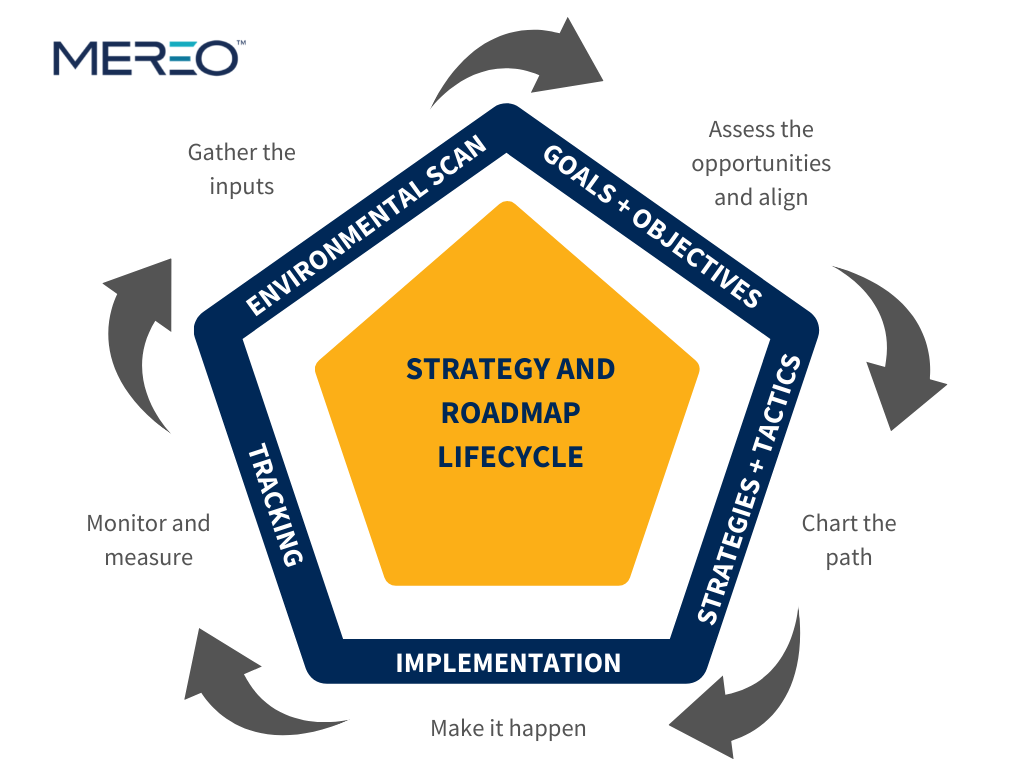
Typically, the product strategy and roadmap lifecycle repeats at least annually, often due to alignment with the corporate budgeting cycles and more often as short-term roadmaps need updates.

The Strategy and Roadmap Lifecycle

In this lifecycle product management leadership should:

  • Continually gather market inputs by performing an environmental scan.
  • Assess and reassess the opportunities — defining and redefining your goals and objectives.
  • Chart the path forward, updating strategies and roadmaps as needed.
  • Execute those plans implementing your strategy.
  • Monitor and measure your progress against goals, tracking key metrics and doing remediation as needed.

This last step is often difficult as most companies do not clearly define metrics for success of these investments in the first place.

Portfolio Rationalization Opportunities

It is important to always keep an eye on opportunities for portfolio rationalization. This is the area where there is often the greatest opportunity to improve efficiencies throughout the organization and to re-purpose resources to accelerate higher priority investments. It is not just about end-of-life; it is about finding ways to be more efficient because your resources are precious, and margin is critical.

Consider these points during each planning cycle:

  • Sales volume, revenue, and profitability performance
  • Impact of eliminating one offering on overall offerings
  • Possible functionality synergies across various products
  • Customer need or competitive advantage opportunities
  • Potential resource allocation shifts where delivered value will be higher

Doing this without emotion means companies need to separate capability from technology. Often a company can change underlying technology and continue to deliver needed capabilities to the end users. In software this is often thought of as re-platforming. In hardware this is often an exercise in Bill of Material rationalization.

In one example, an $8 billion high-tech electronics manufacturer was plagued with high cost of materials and constant supply shortages impacting the manufacturing floor. The design organization specified unique components and requirements for each product without considering the broader portfolio of components in use. The manufacturing engineering team and purchasing team created a large display along the manufacturing floor with all the components required for each assembly and specific displays showing all the variety of specific components like capacitors and connectors.

The designers were invited to tour the floor, and while there they realized they could use common components from one assembly for another. Over a six-month period, the number of parts was reduced by 11% and shortages dropped 22%. Procurement costs improved as volumes of individual components increased, providing more purchasing power and better supply security.

Practice Product Management Governance

Companies need to institute a strong governance practice and culture to ensure a return on investment and to facilitate proactive and reactive response to market and technology changes.

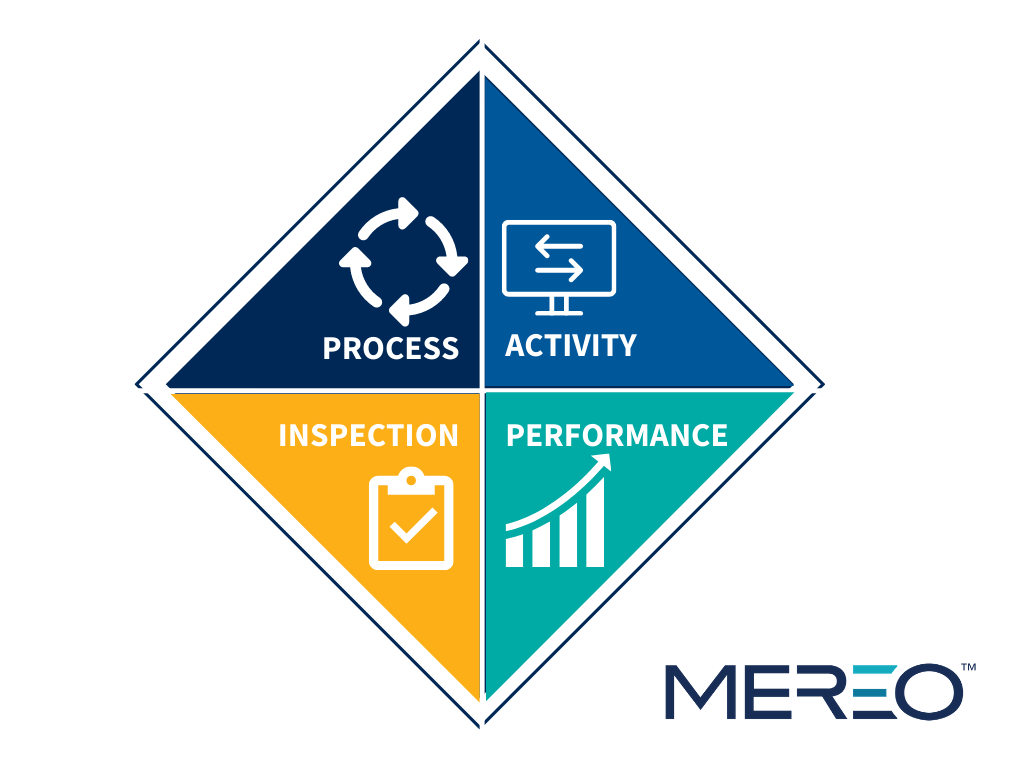
Product Management Governance Chart

But what is governance in practice for a B2B organization? It is helpful to think about governance in four key areas:

  1. Process
  2. Activity
  3. Performance
  4. Inspection

PROCESS

Validate that your processes are being followed and especially that constituent groups inside and outside the organization are contributing appropriately and being updated regularly.

Process governance focus areas include:

  • Are processes and mechanisms in place for optimal customer and partner inputs into the strategy and roadmap?
  • Are clear success metrics defined for each release (i.e., development, market and business metrics)?
  • Are regular processes in place to communicate any changes in content and delivery schedules?

ACTIVITY

Keep a firm hand on a regular cadence of each type of activity critical to creating, launching and successfully selling solutions.

Activity governance focus areas include:

  • Is a regular cadence of cross-functional planning and status reviews in place?
  • Are communication activities occurring regularly to inform cross-functional organizations on release status?
  • Are client advisory boards (CABs) in place and engaged to gather prioritization and strategic inputs from the target market?

PERFORMANCE

Think about both metric establishment and the processes needed to inspect those metrics.

Performance governance focus areas include:

  • Is overall progress status by release measured?
  • Are metrics for success defined?
    • Development / engineering-based
    • Business / market-based
    • Predictability metrics (e.g., performance of content and date delivery against goals)
  • Are roadmaps available for a rolling period of 9 to 15 months in all key product / solution areas?

INSPECTION

Consider how you inspect each key area on a regular basis. This includes not just the inspection of financial metrics but inspection of artifacts and activities as well.

Inspection governance focus areas include:

  • Roadmap reviews and status checks
  • Engineering metric presentations and remediation
  • Business metric reviews and remediation

Unleash Sustainable Revenue Performance

Taking the time to appropriately create and execute effective product roadmap governance is one of the most critical aspects of continuous improvement and assurance of return on development investments.

At Mereo we have served hundreds of B2B companies with strategic governance support to drive sustainable revenue performance. Is your organization charging ahead without a clear map? Contact us to get started.

For more direction on keeping your solution strategy and activities on track, access the exclusive solution management expert workbook.


Access Your Copy


Finding Your Success in the Horizon: Strategic Product Themes


In product management, your strategy does not stop at understanding effective growth options and how to gain validation for your solutions.

To achieve consensus within your business and effectively organize your resources for go-to-market success, it is also important to “paint a picture” of the future and define that future by answering questions such as:

  • What are the goals and objectives over each of the next 3 to 5 years?
  • How will we know we are successful?
  • How will we position ourselves to win against the competition?
  • How and where will we grow? Where must we prune?
  • How much will this cost?

Without a shared and unified focus on where your business is headed, your organization threatens misalignment internally and externally. Employees and leadership will not know or agree on how to focus their time and efforts — and messaging. Your customers will not be able to plan effectively for how and when to employ your solutions and services. Your target profile buyers thus are confused about the misalignment they witness and experience — and may decide to engage competitive offerings.

The onus lies with your solution leadership to take out your binoculars, your telescopes, your viewfinders and determine and effectively communicate a compelling direction to point them toward. Then gaze out onto the horizon ahead and scrutinize the path before you. What is born from that far-sightedness — the aligning force that will drive your solution strategy and organizational efforts for the future to come — is the guiding beacon of a theme.

Developing Strategic Product Management Themes

While strategic product management themes sound easy — and truly are in concept and practice — B2B solution management leadership too often overlooks the value in taking this extra step.

A strategic theme presents a concrete and predictable path for industry, solution or financial analysts. It creates context for the audience — as well as confidence in your organization’s ability to deliver on its promise when you execute effectively. It should embody a sense of achievement for the groups executing on the strategy and the visible milestones along the way.

By developing strategic product management investment themes and time horizons from the onset, your leadership is able to map opportunities against a strategy and avoid falling off-course by following misaligned opportunities.

Additionally, your marketing and sales teams are better set-up to effectively prepare the market — both clients and prospects — for the new or updated offerings. With this vital preparation, your organization overall will realize increased returns on engineering and go-to-market investments.

Strategic Themes in Practice

Now that we have discussed what product management themes are and why they are important, let us explore a tangible example.

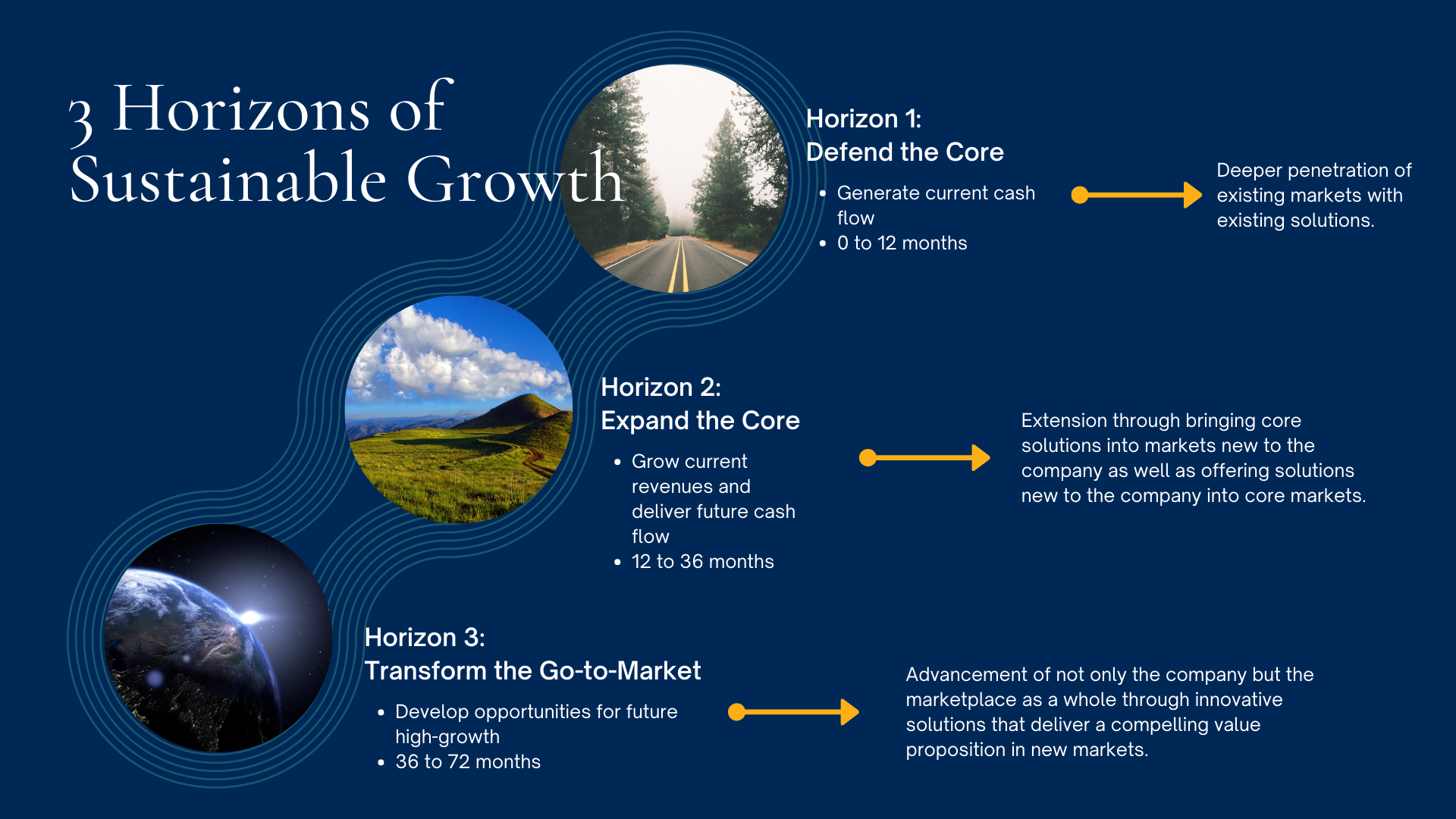
The graphic above depicts a typical approach to defining investment themes over time. In this example:

  • NEXT 12 MONTHS: The first theme is to defend the core markets the company is in and to grow through further penetration of that market.
  • 1-3 YEARS: The theme is to expand from that core into adjacent markets that are new. These could be new geographies, different sized companies or new industries, to name a few.
  • 3-6 YEARS: The final theme is to transform the company’s solutions and innovate in a way that fundamentally changes the market itself.

Now let us apply this strategic theme approach example to a company such as Amazon and consider its recent investment strategy:

  • HORIZON 1: Invest in internal infrastructure (ecommerce and distribution) to broaden and expand products offered and geographic coverage, while leveraging the U.S. Postal Service, FedEx and UPS for shipments.
  • HORIZON 2: Acquire Whole Foods and invest in small warehouses to offer one-day or same-day delivery service, and enter content services through Amazon Prime Video.
  • HORIZON 3: Displace alternative carriers with Amazon fleet of shippers, introduce Amazon brands into the ecommerce site, change the search engine routines to position Amazon’s own products and fundamentally challenge the entire concept of traditional retail and services.

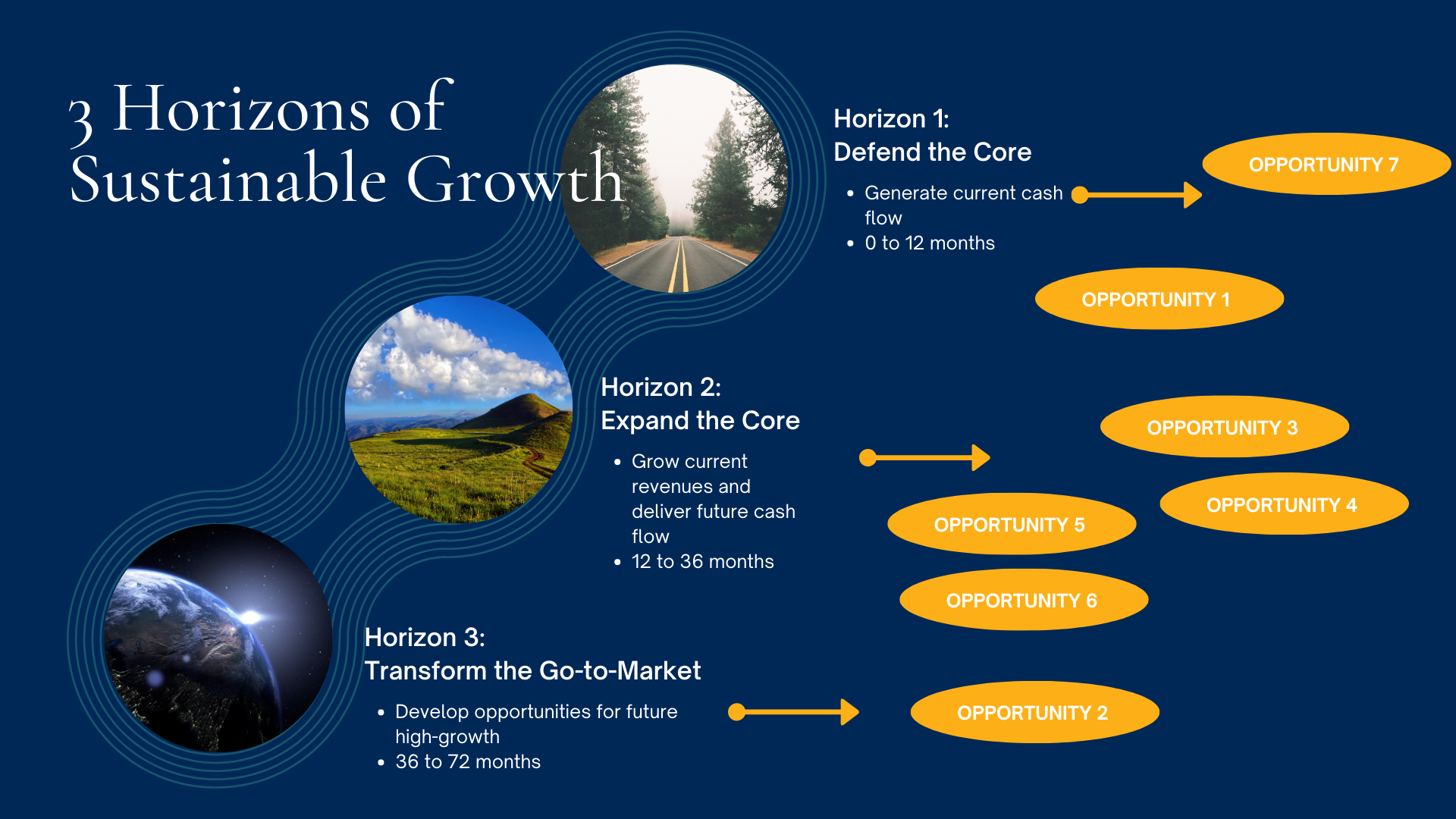
The advantage of establishing a set of themes and horizons is that during your planning and execution discussions it enables you to map your investment opportunities against a strategy framework (a “vision” if you will) to create improved investment and market synergies.

Once the opportunities are mapped, a defined roadmap and investment plan can be established to ensure the highest probability of success and provide guardrails for effective governance.

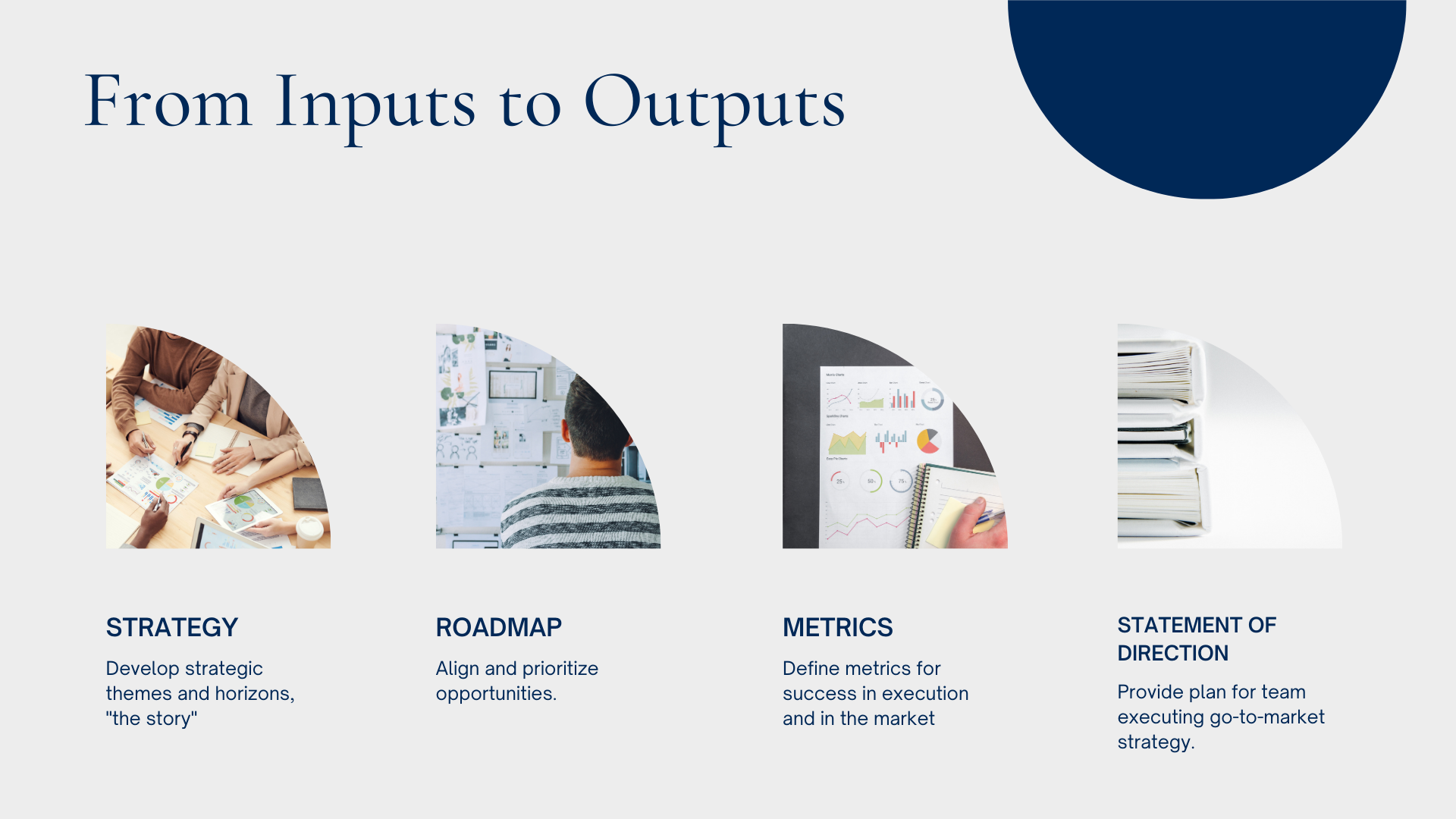
Put another way, the process becomes:

  • Consider your strategic themes and horizons.
  • Utilize those to align and prioritize your opportunities into a defined roadmap.
  • Define your metrics for success in execution and in the market.
  • Present those in a compelling way that can be consumed by organizations that need to execute on the go-to-market plans to deliver the revenue. This “Statement of Direction” presents the target market, the market situation and issues, the goals of each horizon in context of themes, the solutions/services to be delivered, the benefits to the market (and to your company), and the investment and market availability timing.

On Your Horizon: Sustainable Revenue Performance

Mereo principals have helped hundreds of B2B companies develop effective themes and empowering roadmaps that help drive sustainable revenue performance. We bridge cross-organizational alignment gaps and bring an expert eye to solution opportunities worth investing in. Contact us to get started.

For more direction on elevating revenue performance with solution management, access the free Mereo eBook.